Research
Research
Three research groups, bridging state competitiveness and social cohesiveness through education finance policy
Jump to: Competitiveness · Education Finance Policy · Cohesiveness
Competitiveness
STAC Research Group
Faculty of Education, Bar-Ilan University
STAC is my research group on state competitiveness - one of three groups I lead, alongside Education Finance Policy (LEAD) and Cohesiveness (equity, diversity and social justice). STAC sits at the competitiveness end of that spectrum, using international comparative research, large-scale secondary data analysis, and panel data (PIAAC, TALIS, PISA) to study how education systems build the human capital that drives state competitiveness.
Current work includes
- Teachers as a key driver of state competitiveness: salary, self-efficacy, and satisfaction - a comparative study using TALIS 2018
- Problem-solving skills in technology-rich environments among Israeli higher-education graduates - evidence from PIAAC
- Financial and physical resources and PISA performance: an international comparative view
- Does university attendance impact students’ political tolerance and open-mindedness? The atypical case of Israel
- Does nonformal education matter? An international comparative study on nonformal education and immigrant competencies
- Does school choice affect migrant and native students similarly? Cross-country results from PISA and PIAAC data fusion
Current group members
- Yael Hoter-Hermony - TALIS international comparative research - thesis link →
- Amos Polishku - PIAAC international comparative research - thesis link →
- Mor Zahavi - PIAAC international comparative research
- Michal Unger Madar - Creativity and social competence - thesis link →
- Amor Amosi-Nissan - Periphery - dissertation link →
Education Finance Policy
LEAD Research Group
This is my core research area: how resources are allocated to schools - and what that means for both improvement and equity in educational outcomes. My applied research group working on this, LEAD, sits at the bridge between Competitiveness (STAC) and Cohesiveness (EDS).
Key concepts in my work
- Redistribution & allocation mechanisms - resource allocation mechanisms and funding formulae, analyzed through networks and causal data-science models
- EGini & Lorenz curves - Gini-based indices I developed to measure equity in educational outcomes, not just inputs
- IEAD (Improvement in Educational Achievement Distribution) - reconceptualizing the relationship between level of performance and achievement gaps, so that policy doesn’t have to trade off improvement against equity
- EEO (Equality of Educational Opportunity) - equity in inputs (central vs. local funding), horizontal equity, vertical equity, fiscal neutrality, and adequacy
The central question I keep returning to: can we finance education for improvement - designing allocation mechanisms that raise outcomes and narrow gaps, rather than treating the two as a trade-off?
See LEAD, my research group and the ISF-funded international workshop built on this work →
Key papers
(Full publication list, with APA citations, on the Papers page.)
- Gilead, T., & BenDavid-Hadar, I. (2025). Educational justice and formula funding: A complex adaptive systems perspective. Educational Philosophy and Theory, 57(12), 1078-1089.
- Meoded, R., & BenDavid-Hadar, I. (2025). Fiscal decentralization of education: A social network analysis of values underlying local decision-making processes. International Journal of Educational Development, 119, 103444.
- Meoded, R., & BenDavid-Hadar, I. (2025). Does fiscal decentralization in education funding affect equity? State and Local Government Review.
- Betser-Nahum, Y., & BenDavid-Hadar, I. (2025). The municipalities’ efficiency in Israel: The case of the provision of educational services. International Journal of Educational Development, 117, 103370.
- BenDavid-Hadar, I. (2023). Resource allocation mechanism to education and funding formula in Israel. Policy white paper for the Chief Scientist of the Israeli Ministry of Education. (Hebrew)
- Dadon-Golan, Z., BenDavid-Hadar, I., & Klein, J. (2019). Revisiting educational (in)equity: Measuring educational Gini coefficients for Israeli high schools during the years 2001–2011. International Journal of Educational Development, 70, 102091. - the EGini index.
- Dadon-Golan, Z., BenDavid-Hadar, I., & Klein, J. (2019). Equity in education: the Israeli case. International Journal of Educational Management, 33(7), 1670–1685.
- BenDavid-Hadar, I. (2018). Funding education: Developing a method of allocation for improvement. International Journal of Educational Management, 32(1), 2–26.
- BenDavid-Hadar, I., Case, S., & Smith, R. (2018). School funding formulae: Designed to create a learning society? Compare: A Journal of Comparative and International Education, 48(4), 553–570.
- BenDavid-Hadar, I., & Duani, S. (2018). From equitable funding to equality of educational opportunity: The Israeli case. Journal of Education Finance, 43(4), 360–380.
- Gilead, T., & BenDavid-Hadar, I. (2017). Employing needs-based funding formulae - some unavoidable tradeoffs. International Journal of Educational Management, 31(7), 1092–1102.
- BenDavid-Hadar, I. (2016). School finance policy and social justice. International Journal of Educational Development, 46, 166–174.
- BenDavid-Hadar, I. (2014). Education, cognitive development, and poverty: Implications for school finance policy. Journal of Education Finance, 40(2), 131–155.
- BenDavid-Hadar, I. (2014). Analyzing school finance policy: Beyond a quantitative approach. International Journal of Public Administration, 37(5), 271–280.
- BenDavid-Hadar, I. (2013). Is it really fair? A critical analysis of Israel’s school finance policy. International Journal of Educational Administration, 5(1), 63–79.
- BenDavid-Hadar, I., & Ziderman, A. (2011). A new model for equitable and efficient resource allocation to schools: The Israeli case. Education Economics, 19(4), 341–362.
Cohesiveness
EDS Research Lab
Equity, Diversity, and Social Justice Faculty of Education, Bar-Ilan University · Founded 2010
The EDS Lab is one of three research groups I lead - alongside Competitiveness (STAC) and Education Finance Policy (LEAD) - sitting at the cohesiveness end of that spectrum. EDS studies national-level policy questions using mixed methods: how education systems can advance equity, diversity, and social justice across special needs, minority, ultra-Orthodox, immigrant, and periphery populations.
One active initiative within the lab is our Cost-Effectiveness Analysis in Education research group, which develops and applies CEA methods to Israeli education programs.
Principal Investigator
Prof. Iris BenDavid-Hadar - Founder and Head. Bio →
Meet the group
In their own words.
 Dr. Karen SauerPost-doctoral researcher, LEAD
I am a Post Doctoral researcher at Bar-Ilan University. My research focuses on education governance and fiscal policy, examining how institutional reforms shape student outcomes. I am particularly interested in how the transition from decentralized to centralized education systems affects equity across regions, and in understanding the role of public spending, especially teacher compensation, in improving learning outcomes. My work uses panel-data econometric methods to analyze Chile's SLEP education reform.
 Michal Tzadoky-DzhurinskyPhD student, EDS
I am Michal Tzadoky-Dzhurinsky, a PhD student in Education at Bar-Ilan University. My research focuses on educational inequality and the values that shape education policy. I examine how declared and implicit values influence policies designed to reduce educational gaps in Israel, from their formulation to implementation and evaluation. Using policy analysis, interviews, and semantic network analysis, I aim to contribute to more equitable and evidence-informed education policy.
 Yifat Betser-NahumLEAD group member
I am the National Lead for Clinical Practice in Teacher Education at Israel's Ministry of Education. My research focuses on economic efficiency in education systems. In my published study, I examined the efficiency of Israeli local authorities in providing educational services. I am also interested in professional development and innovation in education, particularly in understanding how policy, organizational processes, and resource allocation can improve educational systems and outcomes.
 Fatina Bader SarsoorPhD student, EDS
I am a PhD student in Education at Bar-Ilan University. My research focuses on academic resilience, educational inequality, and reading literacy, with a particular interest in international large-scale assessments such as PIRLS. I explore how individual and school-level factors shape academic resilience across countries and over time. My research aims to deepen our understanding of the conditions that foster educational resilience and equity.
 Dr. Roi Arjeh WolfPhD alumnus, 2024
I am a lecturer in education at Orot Israel College. My research focuses on the political dynamics shaping the allocation of educational resources. I am particularly interested in how political actors influence education budgets and funding priorities. My work examines changes to education funding after the state budget has been approved, using in-depth interviews with key political actors and analysis of parliamentary Finance Committee records.
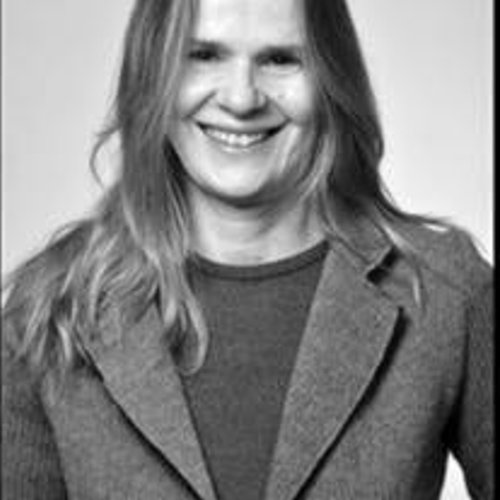 Dr. Orit KrubinerPhD alumna, 2024
I hold a PhD in Education from Bar-Ilan University. My research focuses on education policy, specialized public schools, and parental choice in Israel. I am particularly interested in how market-oriented policies and parental choice shape public education systems. My doctoral research examined four decades of policy development in Israeli specialized schools, exploring the relationships between government policy, local authorities, parental involvement, and educational equity.
- Limor EylonPhD student, EDS - Cost-Effectiveness Analysis in Education
I am a PhD candidate in the Department of Special Education at Bar-Ilan University, specializing in Cognitive Diversity (Intellectual Disability). My doctoral research uses Cost-Effectiveness Analysis to examine how Post-Secondary Education programs affect adaptive behavior, cognition, and employment outcomes for individuals with intellectual disability. I also work as an expert at "Matya" (Regional Support Center) in Holon, training teaching teams on inclusion for students with special needs.
- Dr. Ruth MeodedPostdoctoral researcher; LEAD
I am a postdoctoral researcher in the Budget Department at the Israeli Ministry of Education. My research focuses on the allocation of educational resources across central government and local authorities in Israel. I am particularly interested in equity, cost-effectiveness, and causal evaluation in education finance, and in understanding how resource allocation can improve student outcomes. My work examines patterns of resource distribution and their relationship with educational outcomes, with a focus on special education.
 Liam NaimMA student, Educational Administration, Leadership and Policy
I am an MA student in the department of Educational Administration, Leadership and Policy at Bar-Ilan University and a member of Prof. Iris BenDavid-Hadar's research group. I am interested in how countries invest per student at each stage of schooling, from pre-primary to upper secondary, and in exploring how these patterns relate to inequality, competitiveness, and human development across OECD countries. I hope to contribute to evidence-based funding policy that narrows educational gaps.
 Adi ZarbiPh.D. candidate, Educational Administration
I am a Ph.D. candidate in the department of Educational Administration, Leadership and Policy at Bar-Ilan University, holding master's degrees in both Educational Administration and Financial Mathematics. I am interested in the financial aspects of the education system and in exploring the intersection of economic resource allocation and educational policy. My research aims to understand how funding structures influence educational equity and school performance. I hope to contribute to the broader field of educational policy by leveraging my deep understanding of mathematical finance models; integrating these quantitative tools into educational research can ultimately facilitate more informed, data-driven financial decision-making within education systems.
Current projects
- Yaara Shilo - Early childhood education policy
- Fatina Bader Sarsoor - Minority ICT4D (empowering underprivileged minority students in science education)
- Sharon Malki-Levy - Language policy and immigration
- Orit Krubiner - Specialized schools and quasi-market policy
- Or May-Yazdi - Financial education for the Ultra-Orthodox sector
- Yael Leby - Ultra-Orthodox integration in higher education
- Uri Even - Educational leadership
- Reut Tsadkani - Improvement and incentives
All current & former advisees
(across all three research groups)
Current PhD students
- Sami Atar (with Prof. Joseph Klein) - Supplemental resource allocation and educational achievement distribution: local authorities in Israel
- Fatina Bader Sarsoor - Academic resilience and Arabic language literacy (PIRLS)
- Michal Tzadoky-Dzhurinsky - Equity in education policy: the Israeli case
Current MA students
- Eden Gannam - The GEFEN reform through the lens of quasi-market theory
- Adi Zarbi - Teachers’ salary, class size & investment in education and PISA achievements
- Michal Rinuss - AI in early-childhood leadership: productivity, self-efficacy, stress, burnout
- Zvia Nadav - Teacher pay, workload, and retention in Israel
- Yonathan Cohen (with Prof. Gross) - Student satisfaction, institutional factors, and alumni loyalty
- Yafit Gorman - The education finance of local authorities: a policy analysis
- Rotem Shemesh - Learning mathematics: an international comparative analysis
- Hani Mihawi - Equity in resource allocation, crisis management, and student resilience
Current post-doc
- Dr. Karen Sauer (2022–present)
PhD alumni
- 2025
Dr. Ruth Meoded
Equity in School Finance: The Local Authorities Case in Israel
- 2024
Dr. Miri Wolf (with Prof. Bracha Kramarski)
Cultivating Teaching Beliefs and Practices for Knowledge-Constructing Metacognitive Mathematical Discourse in the Classroom Among Pre-/In-Service Teachers in a Theory-Based Training Environment That Includes Interactive Technology
- 2024
Dr. Yael Leby (with Dr. Shira Iluz)
Integrating the Ultra-Orthodox into Higher Education in Israel: From Examining Policy to Examining the Relationships Between the Need for Tuition Financing, Motives for Higher-Education Enrollment, and Individual Choice of Discipline
- 2024
Dr. Sharon Malki-Levy (with Prof. Carmit Altman)
Linguistic Inequity: A Policy Study from International, Local, and School Perspectives
- 2024
Dr. Orit Krubiner
Specialized Public Schools in Israel: A Longitudinal Policy Research over the Past Four Decades - The Case of Parental Choice
- 2023
Dr. Roi Arjeh Wolf (with Prof. Joseph Klein)
Between Political Climate and Budgetary Decision-Making Processes: The Case of the Changes in the Education Budget in Israel
- 2023
Dr. Yaara Shilo
Vision versus Reality: Early Childhood Education Policy in Israel in the Last Decades
- 2022
Dr. Asael Sharir (with Prof. Joseph Klein)
Developing an Evaluation Model for Education for Values in High Schools in the National State Education System in Israel
- 2021
Dr. Amor Amosi-Nissan
Policy for Promoting Excellence in the Periphery in Israel: Costs and Effectiveness Analysis of the National "Mezuyanegev" Program in Eilat
- 2020
Dr. Mor Zehavi
Choice and Efficiency in Education: New Perspective on the Tiebout Model
- 2016
Dr. Zehorit Dadon-Golan
Measuring Education Inequality in Israel: New Indicators
(A public dissertation record isn’t yet available online for every 2024–2025 graduate - Bar-Ilan’s repository typically has an embargo period before full text is deposited. Get in touch for a copy.)
MA alumni
- 2025
Lidor Edri
Inclusion of Children with Special Needs in Elementary Schools in Israel: Perspectives on Parental Involvement, Budgeting, and Educational Policy
- 2024
Yifat Betser-Nahum
Efficiency in Local Educational Funding: A Data Envelopment Analysis of Municipal Allocation
- 2024
Liraz Gedri
Relationships Among (Altruistic) Leadership, Teacher Satisfaction, and School Effectiveness
- 2022
Amos Polishku
Does Nonformal Education Matter? An International Comparative Study on the Relationships Between Nonformal Education and Competencies Among Natives and Immigrants
- 2022
Yael Hoter-Hermony
The Relationships Among Teacher Quality, Teacher Satisfaction, Investment in Education, and PISA Performance: An International Comparative View
- 2022
Reut Tsadkani
School Effectiveness in Israel: Systemic and Intra-School Perspectives
- 2020
Ruth Meoded
Education Finance Policy of Culturally Diverse Societies: Equity Analyses of School Finance Policy in Israeli Ultra-Orthodox Primary Education
- 2020
Amin ElGamal
Relationships Among Parental Choice, Satisfaction, Involvement, and Expectations, and School Efficiency: The Case of Primary Schools for Arabic-Speaking Students in Israel
- 2020
Roslyn Stentner
Principals' and Teachers' Perceptions of the Principal's Role in Teachers' Professional Development Toward 21st-Century Competencies
- 2019
Fatina Bader Sarsoor
Effectiveness and Cost-Effectiveness of Integrating ICT in Fifth-Grade Science Classes in Arabic-Speaking Schools in Israel
- 2019
Orit Krubiner
Specialized Schools in Israel: A Longitudinal Policy Research over the Past Three Decades
- 2018
Yaniv Hadad
Relationships Between Financial Education and the Consumption Culture of Young Children
- 2018
Michal Madar-Ungar
The Relationship Among Type of Education, Creative Thinking, and Social Competence of Children: A Cost-Effectiveness Analysis of Homeschooling in Israel
- 2017
Or May-Yazdi
The Relationship Among Economic Well-Being, Academic Education, and Financial Literacy: The Case of the Israeli Ultra-Orthodox Sector
- 2017
Idit Chalfon
The Relationships Between Parental Involvement, School Principals' Management Style, and Mathematics Achievement Among Students in Primary Schools Specializing in Behavioral Disorders
- 2017
Roi Arjeh Wolf
- 2016
Sigal Duani
From Equitable Funding to Equality of Educational Opportunity: The Case of Israeli Primary Schools
- 2016
Uri Even
The Effects of Management Style and School Climate on Mathematics Achievement in Special-Education Schools Specializing in Conduct Disorders
- 2014
Idit Levy
The Integration Policy of Special-Needs Children in Regular Schools: A Comparative Policy Research
- 2014
Noam Sharaby
Differences in Mathematics Achievement on Matriculation Examinations Based on Background Variables of Younger Students Identified as Gifted in Mathematics
- 2013
Nehama Zilberberg
A Growth Model for Evaluating Achievement in Mathematics by Measuring School Added Value Through Readiness, Participation, Self-Efficacy, Additional Reinforcement Hours, and Student Background Variables
- 2012
Yuval Oz (with Prof. Deborah Court)
How the Democratic School "Nitzan" Tries to Minimize Social Disparities Among Disadvantaged Students: A Case Study
(20 of 22 MA theses have a public record; the rest aren’t indexed online - most likely too recent or predate digital deposit requirements.)
Post-doc alumni
Dr. Zehorit Dadon-Golan (2017–2019) · Dr. Mowafaq Qadach (2018–2020)
In the media
- Yaara Shilo - early childhood education policy; personal site · media appearances: 1 · 2 · 3
- Amor Amosi - It’s All About the Music: Excellence in Israel’s Periphery, a Cost-Effectiveness Analysis of the National “Mezuyanegev” Program in Eilat - thesis